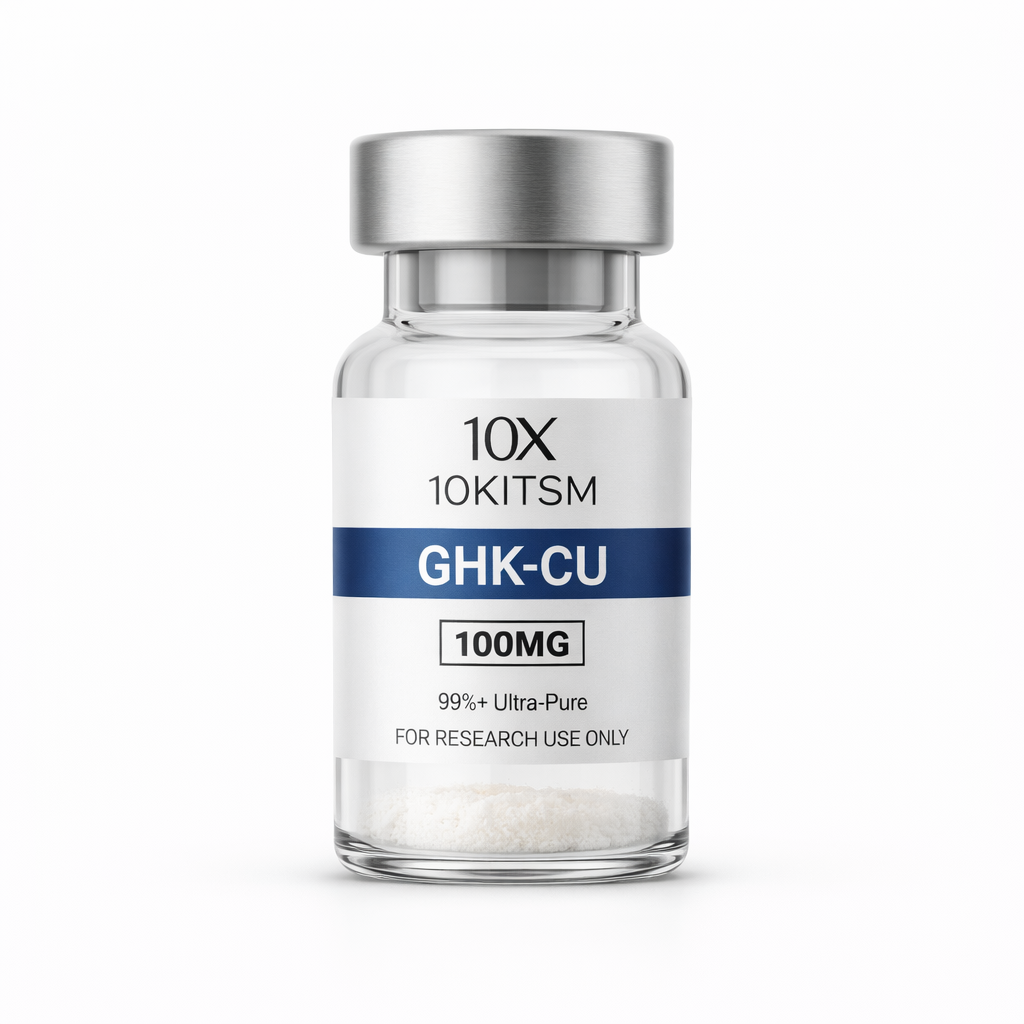
GHK-Cu (Copper Peptide) 100mg
100mgA naturally occurring copper-binding tripeptide extensively studied for skin regeneration, wound healing, and anti-aging signalling.
Overview
GHK-Cu is a copper complex of the tripeptide glycyl-L-histidyl-L-lysine, first isolated from human plasma. Its concentration in the body declines with age, which has driven substantial research interest in its regenerative signalling.
This product is supplied as 100mg of lyophilised powder for laboratory reconstitution and research use only.
Mechanism of action
GHK-Cu delivers copper ions to cells and acts as a signalling molecule that influences the expression of a large number of human genes, many related to tissue remodelling, antioxidant defence, and repair.
Research describes stimulation of collagen and glycosaminoglycan synthesis, support of angiogenesis, and modulation of matrix metalloproteinases involved in skin remodelling.
Research highlights
GHK-Cu is one of the most studied copper peptides, with literature covering wound healing, skin firmness and elasticity, hair follicle stimulation, and broad gene-expression modulation.
Its antioxidant and anti-inflammatory properties have made it a common reference compound in dermatological and regenerative research.
Reference dosing
Research protocols vary widely, including topical application, subcutaneous injection, and cosmetic mesotherapy. Injectable research protocols often reference 1-3mg per dose, 2-3x/week, over 4-8 week cycles. This reflects published research only.
Storage & handling
Store lyophilised vials refrigerated at 2-8C, away from light. Keep reconstituted solution refrigerated and use per protocol.
Specifications
| Contents | GHK-Cu 100mg |
| Form | Lyophilised powder |
| Presentation | Single vial |
| Purity | >=99% (HPLC) |
| Reconstitution | Bacteriostatic water (not included) |
Frequently asked questions
What is GHK-Cu?
It is a copper-binding tripeptide (glycyl-histidyl-lysine) naturally found in human plasma, studied for skin and tissue regeneration.
Why does GHK-Cu contain copper?
The peptide binds and delivers copper ions, which are central to its role in collagen synthesis, antioxidant defence, and tissue remodelling.