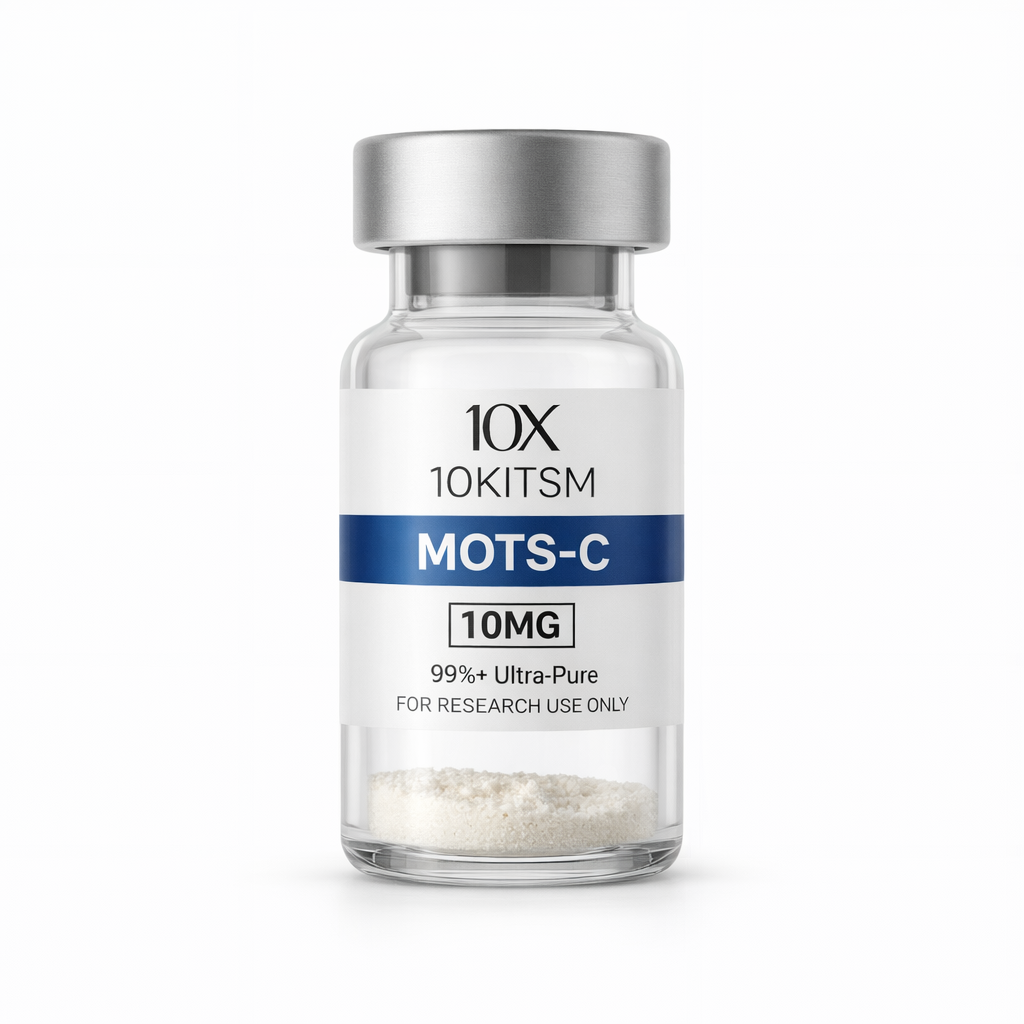
MOTS-c 10mg
10mgA mitochondrial-derived peptide studied for its role in metabolic regulation, insulin sensitivity, and exercise-mimetic signalling.
Overview
MOTS-c is a 16-amino-acid peptide encoded within the mitochondrial genome. It is one of a novel class of mitochondrial-derived peptides that act as signalling molecules regulating metabolic homeostasis.
This product is supplied as 10mg of lyophilised powder for laboratory reconstitution and research use only.
Mechanism of action
MOTS-c translocates to the nucleus under metabolic stress and regulates the expression of genes involved in metabolic adaptation, notably via the AMPK pathway - a central energy sensor.
Research describes effects on glucose uptake, insulin sensitivity, and fatty-acid metabolism, positioning MOTS-c as an exercise-mimetic in study models.
Research highlights
MOTS-c has attracted significant research interest as a regulator of the metabolic response to exercise and diet in animal models.
Studies report improved insulin sensitivity and metabolic flexibility, making it a common reference peptide in mitochondrial and metabolic research.
Reference dosing
Research protocols often use 2-3x/week injections for metabolic and mitochondrial signalling studies. This reflects published research protocols only.
Storage & handling
Store lyophilised vials refrigerated at 2-8C, protected from light. Keep reconstituted solution refrigerated and use per protocol.
Specifications
| Contents | MOTS-c 10mg |
| Form | Lyophilised powder |
| Presentation | Single vial |
| Purity | >=99% (HPLC) |
| Reconstitution | Bacteriostatic water (not included) |
Frequently asked questions
What is MOTS-c?
It is a mitochondrial-derived signalling peptide studied for metabolic regulation and insulin sensitivity.
Why is MOTS-c called an exercise mimetic?
Research shows it activates AMPK and metabolic pathways similar to those triggered by physical exercise in model systems.