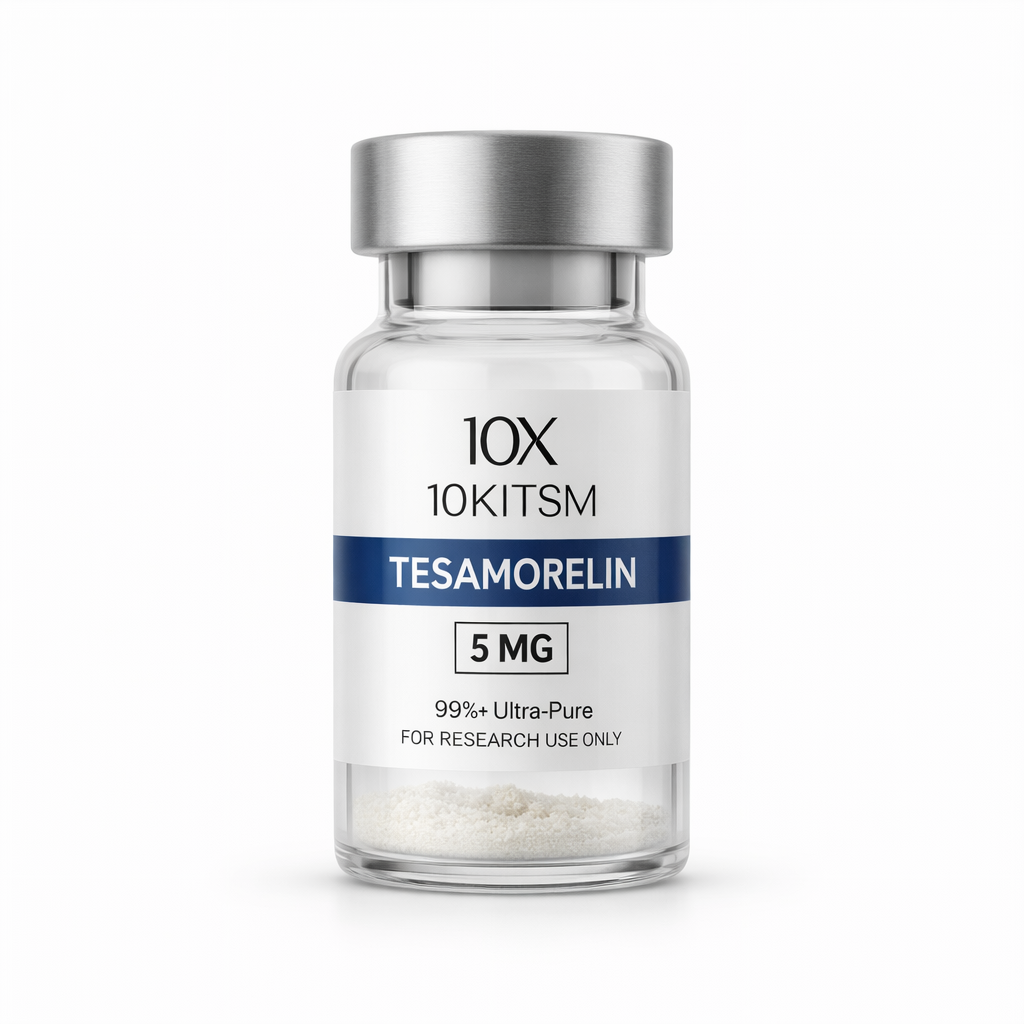
Tesamorelin 5mg
5mgA stabilised growth hormone-releasing hormone (GHRH) analogue studied in the literature for its effects on visceral adipose tissue and GH stimulation.
Overview
Tesamorelin is a synthetic analogue of the 44-amino-acid GHRH peptide, modified for improved stability. It is one of the most researched GHRH analogues and is well characterised in the visceral fat and metabolic literature.
This product is supplied as 5mg of lyophilised powder for laboratory reconstitution and research use only.
Mechanism of action
Tesamorelin binds the GHRH receptor on the anterior pituitary, stimulating endogenous production and pulsatile release of growth hormone while preserving the natural feedback architecture of the GH axis.
The resulting increase in GH and IGF-1 has been associated in research with reductions in visceral adipose tissue in model and clinical study populations.
Research highlights
Tesamorelin is notable for a comparatively robust clinical evidence base among GHRH analogues, with published trials reporting selective reductions in visceral fat.
Because it stimulates endogenous GH rather than supplying exogenous hormone, it is used in research to study physiological GH pulse patterns.
Reference dosing
Research protocols describe once-daily subcutaneous doses of 1-2mg, often in cycles of 3-6 months. This reflects published research schedules and is not a recommendation for human use.
Storage & handling
Store lyophilised vials refrigerated at 2-8C, away from light. Keep reconstituted solution refrigerated and use per protocol.
Specifications
| Contents | Tesamorelin 5mg |
| Form | Lyophilised powder |
| Presentation | Single vial |
| Purity | >=99% (HPLC) |
| Reconstitution | Bacteriostatic water (not included) |
Frequently asked questions
What makes Tesamorelin different from other GH peptides?
It is a stabilised GHRH analogue with a strong published research base specifically around visceral adipose tissue.
How is Tesamorelin supplied?
As a 5mg lyophilised powder vial requiring reconstitution with bacteriostatic water for laboratory research.